Film
Premiere
coming
soon

(english version below)
Die Live-Performance „Der verlorene Vater“ erzählt mit grell-bunten 8mm-Amateurfilmaufnahmen eine fiktive Familiengeschichte, die sich über die USA und Deutschland bis nach Ex-Jugoslawien ausbreitet. Das grobkörnige Super-8-Material wurde in den 1960er und 70er Jahren nur sparsam eingesetzt – ohne Autofokus und Mikrofon, in einer Ära vor Home-Video und Internet. Die Ausschnitte der vergangenen Wirklichkeiten aus drei ganz unterschiedlichen Ländern zeigen überraschende Ähnlichkeiten: Hinter der Kamera standen meist die Väter als Regisseure des Familienlebens. Das sind sie heute nicht mehr. Das Theaterereignis im Babylon wird durch heutige cineastische Filmaufnahmen erweitert, alte Inszenierungen werden vergegenwärtigt und neuen Sichtweisen gegenüber gestellt. Ein Wandel wird deutlich – bei allem Gepäck, das zu tragen ist. Die dokumentarische Fiktion an der Schnittstelle von Film und Theater ist der komplexe Versuch einer Enttraumatisierung.
Zum Inhalt
SELMA, ein Kind der 90er aus New York, hat ein paar Probleme und begibt sich auf die Suche nach ihrer Herkunft. Im Kino auf der Bühne deckt sie Familiengeheimnisse auf, von denen sie keine Ahnung hatte. „Das Schweigen frisst sich durch alle Schichten des Körpers bis in die nächste Generation.“ Hilfe bekommt sie von RICHARD SCHÖR, dem Rechercheur, von FRAU KATTEL, der Therapeutin und von ihrem Freund TONY, der Selma hinterher reist und Musik macht.
Per Video wird das Ensemble erweitert: STAN, der amerikanische Großvater führt nie gesehene 8mm-Aufnahmen aus dem Vietnamkrieg vor. Seine Ex-Frau EMMA aus Montana sorgt als ehemalige Mary Wigman-Schülerin für freiere Bewegung. Deren Sohn MIKE (Selmas Vater) bringt die 8mm-Aufnahmen, die ihn als Kind zeigen, in eine neue, kritische Perspektive. Seine Frau HANA, Selmas Mutter, ist 1993 aus Jugoslawien geflohen und lebt seitdem erfolgreich den amerikanischen Traum – den Selma hinterfragt. In Berlin trifft Selma auf HARTMUT, der Dresden 1945 noch hat brennen sehen. Hartmuts 8mm-Filme zeigen nicht nur die ZDF-Hitparade mit Bata Illic, sondern auch DDR-Panzer auf dem Alexanderplatz. DJULA, Hanas Cousine, führt Familienfilme aus Sarajevo und Mostar vor, und vor allem aus Banja Luka, dem Geburtsort von Hana.
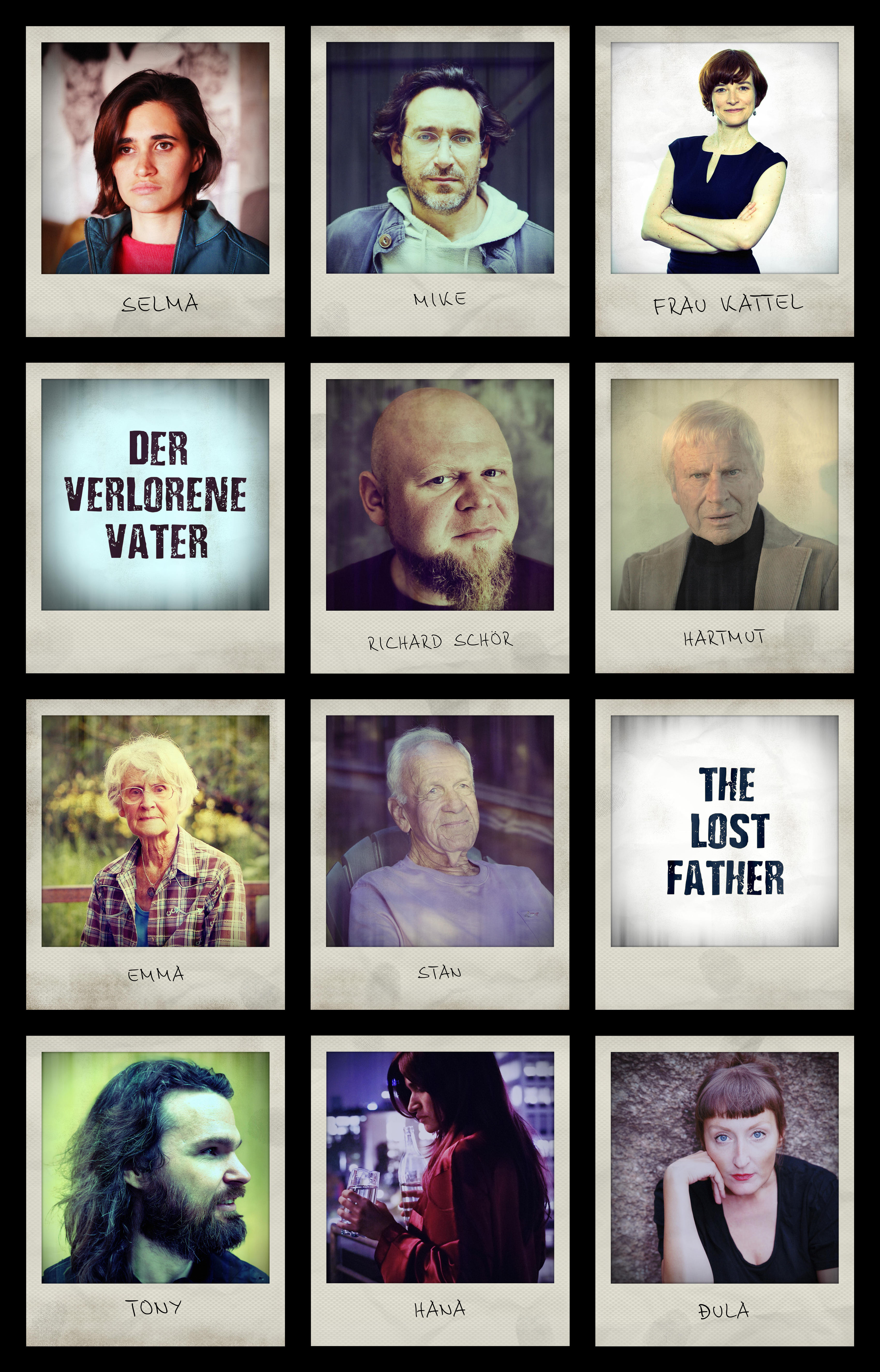
(deutsche Version oben) Incorporating vivid, amateur 8mm film footage, the live performance “Der verlorene Vater” (The Lost Father) traces a fictional family story that spans from the USA and Germany to the former Yugoslavia. The grainy Super 8 material was filmed sparingly in the 1960s and 70s—without autofocus and microphones, in an era before home video and the internet. The snippets of past realities from three very different countries show surprising similarities – for example, it was usually the father who stood behind the camera as the director of family life. That is no longer the case today. In the theater, the live stage performance is enhanced by contemporary cinematic film sequences; old scenes are brought to life and confronted with new interpretations. Change becomes clear—with all the baggage it brings. Documentary fiction at the interface of film and theater constitutes a complex attempt at assimilating trauma. SELMA, born in New York in the 90s, has a few problems and goes on a search for her origins. On the cinema’s stage, she uncovers family secrets she knew nothing about. “Silence eats through all the layers of the body and into the next generation.” She’s assisted in her search by RICHARD SCHÖR, the researcher, FRAU KATTEL, her therapist, and TONY, the musical boyfriend attempting to follow her. The ensemble is augmented by video: STAN, the American grandfather, presents 8mm recordings from the Vietnam War that have never been seen before. His ex-wife EMMA from Montana, a former student of Mary Wigman, offers a model of freer movement. Their son MIKE (Selma’s father) brings a new, critical perspective to the 8mm shots that show him as a child. His wife HANA, Selma’s mother, fled Yugoslavia in 1993 and since then has successfully pursued the American dream—a dream which Selma questions. In Berlin, Selma meets HARTMUT, who saw Dresden burning in 1945. Hartmut’s 8mm films show not only the ZDF hit parade with Bata Illic, but also GDR tanks on Alexanderplatz. DJULA, Hana’s cousin, presents family films from Sarajevo, Mostar, and above all from Banja Luka, Hana’s birthplace. About the content